Short answer: neither a tuition centre nor a home tutor is automatically better. The right choice is the setting in which your child can engage, receive appropriate teaching and become more independent.
Do not begin with the provider's format. Begin with the learner: what happens when work becomes difficult, what kind of attention helps, and where can they concentrate without feeling overwhelmed?
What does centre-based tuition look like here?
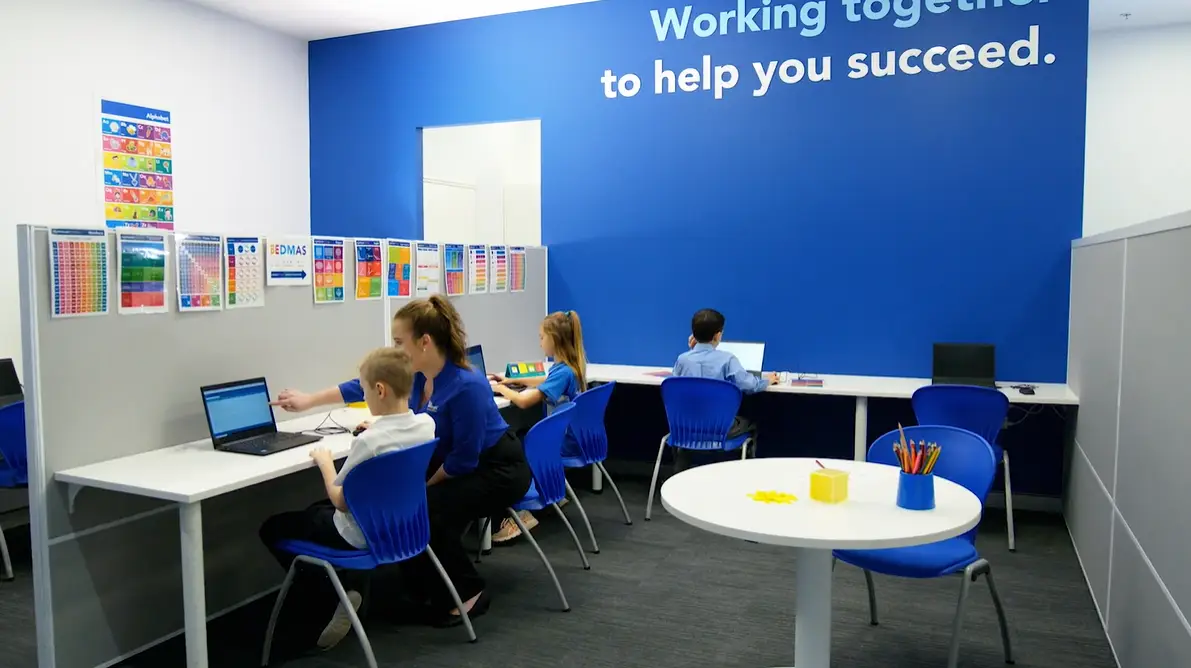
At Kip McGrath Darlington, a qualified, experienced and DBS-checked teacher supports a maximum of four students during a structured 60-minute lesson. Learners follow individual work rather than a shared class worksheet, with direct one-to-one explanation and feedback within the session.
This model can suit a child who benefits from a clear separation between home and learning, while still needing an adult to notice hesitation, adapt an explanation and choose the next task.
When might a home tutor be a better fit?
One-to-one tuition at home may suit a learner who:
needs an adult beside them throughout the lesson;
cannot travel comfortably to a centre;
requires specialist support a particular tutor can provide;
works best in a familiar environment;
needs scheduling flexibility that a centre cannot offer.
Home is not automatically distraction-free. Siblings, devices, pets and the difficulty of switching from family time to lesson time can all affect concentration. For another child, familiarity may be exactly what makes learning possible.
How much individual attention will my child receive?
Ask what “personalised” means in practice. Individual support should mean that the objective, task, explanation and feedback respond to the learner's needs. It does not always require one learner and one adult in a room.
In a small group, ask how many students one tutor supports, whether they work at the same level, and what happens when several need help at once. With a private tutor, ask how they prevent the learner becoming dependent on constant prompting.
What should I check about the teacher?
Whatever the setting, ask about qualifications, relevant subject and age-range experience, DBS checking, safeguarding arrangements, assessment and progress review. A convenient format cannot compensate for teaching that is poorly matched to the learner.
Which environment will help confidence?
Some children feel exposed with one adult watching every answer. Others find any shared setting distracting. Some value seeing that other learners also find things difficult; others need complete privacy.
Ask your child where they find it easiest to attempt a mistake and ask for help. Comfort is not about making every task easy. It is about creating enough safety for useful challenge.
How do we make the decision?
Compare providers using the same questions rather than choosing on format or price alone. Our guide to what to ask before choosing a tutor provides a practical checklist.
If you are considering our centre, a free assessment lets you see the environment, discuss your child's needs and decide whether the model feels right. A responsible answer may sometimes be that a different form of support would fit better.